Small off-grid communities exist in quiet corners of the country where people build their own systems, grow their own food, and rely on tools and teamwork rather than city utilities. These micro-communities vary widely. Some focus on farming, some on self-sufficiency, some on eco-living, and others on spiritual or communal values.
They share a common thread: a desire for independence and a simpler, more intentional way of life. Anyone curious about off-grid communities in the USA will find groups tucked into forests, deserts, mountains, and plains, each with its own rhythm and identity.
People join these micro-communities for many reasons. Some want a break from city noise. Some want to raise children somewhere quiet and natural.
Where Off-Grid Micro-Communities Thrive
The country holds hidden pockets where off-grid life flourishes.
- Earthship Neighborhoods, New Mexico
These communities build homes out of earth-packed tires, bottles, and recycled materials. Solar panels, indoor greenhouses, and water-recycling systems give residents full independence. The striking architecture makes these homes look like something from another world. - Three Rivers Collective, Oregon
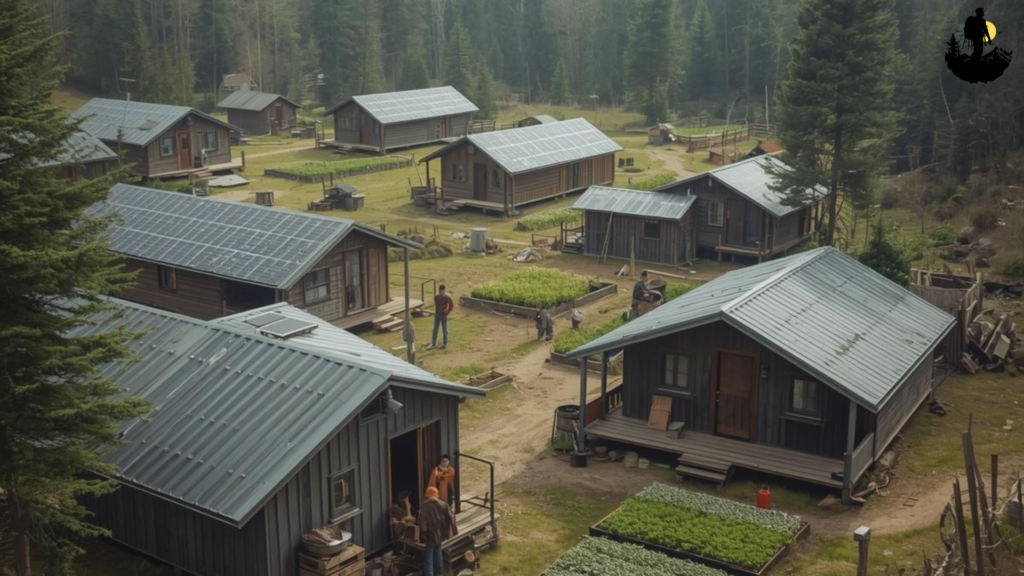
Families and individuals share land tucked into the forest. The community practices permaculture, grows vegetables, and uses shared tools to maintain gardens and cabins. The group focuses on sustainability and cooperation. - Blue Mountain Homestead Cluster, Montana
Rugged land and long winters shape daily life. Residents rely on shared woodcutting, joint water systems, and simple living habits. Many live in small cabins or hand-built log homes. - Black Hills Off-Grid Meadows, South Dakota
A spread-out group of families grows food, raises livestock, and uses solar arrays for power. The area offers wide skies, rolling hills, and the kind of quiet that settles deeply into daily routines. - Arcosanti Experimental Micro-City, Arizona
An architectural community uses creative design to reduce environmental impact. Residents live in walkable clusters, work in craft studios, and participate in ongoing construction and art projects.
What Draws People Toward Off-Grid Living
- Long hours, fewer comforts, and constant maintenance sound difficult at first, yet people still choose this path.
- Many seek a slower pace where screens and schedules control less of their time.
- Community members rely on one another for food, repairs, emergencies, and companionship.
- Electricity often comes from solar panels or wind turbines. Water collects from rain, springs, or wells. Heat comes from woodstoves.
- Food comes from gardens, greenhouses, or small livestock. Daily routines center on tasks that keep everything running smoothly. Nothing feels rushed because every task brims with purpose.
- Some people like the independence. Others appreciate the sense of meaning that comes from growing their own food or building their own structures.
- Many enjoy the break from digital noise. Most feel proud of living a life that demands creativity and problem-solving.
How Micro-Communities Stay Connected
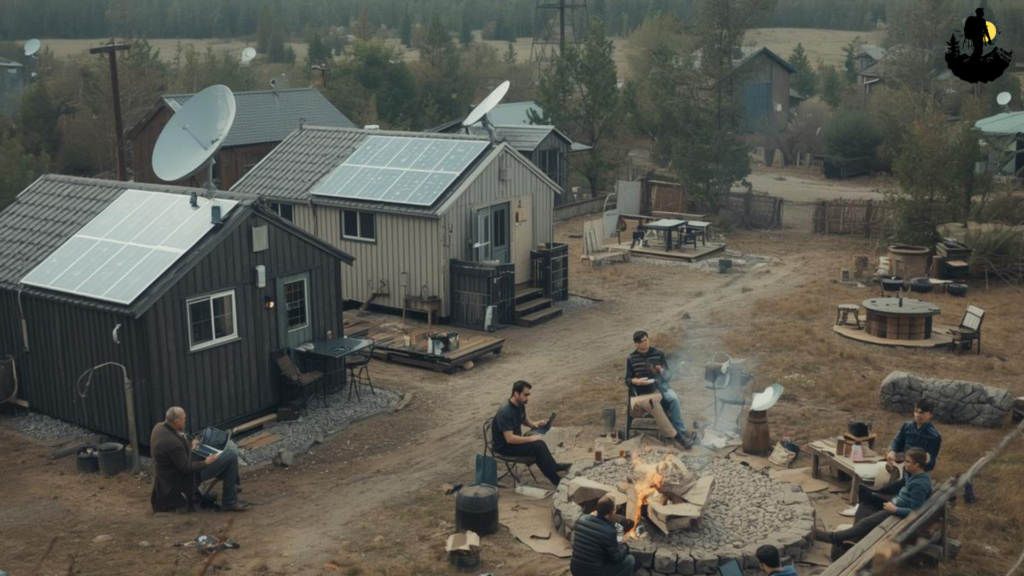
Off-grid doesn’t mean isolated. These communities maintain strong internal networks. Neighbors often share tools, seeds, solar knowledge, carpentry skills, or cooking traditions. Weekly gatherings help everyone check in, talk through challenges, and make decisions that affect the group.
Many communities practice consensus-based decision-making. This method encourages conversation rather than voting. People talk through choices until everyone feels comfortable with the plan.
Internet access varies. Some areas rely on satellite or mobile hotspots. Others remain offline entirely by choice. Communication with the outside world depends on the community’s values and geography.
Economic Life in Off-Grid Settlements
Many residents create income through small crafts, woodworking, farming, or construction. Some sell handmade goods at local markets. Others host workshops for visitors curious about off-grid living. A few maintain online businesses, balancing digital work with rural life.
Bartering often becomes part of the culture. Someone might trade honey for firewood, eggs for home repairs, or handmade clothing for tools. Money plays a role, yet the exchange of skills creates stronger bonds.
In some places, visiting volunteers help in exchange for room and board. These visitors learn gardening, building, or animal care while supporting the community.
What Daily Life Looks Like
Days revolve around weather and necessity. Mornings often start early. Chickens need feeding, solar batteries need checking, and gardens need tending before the sun grows hot. Wood gets chopped before winter storms. Water filters need cleaning. Roads need clearing after heavy snow or rain.
Meals are usually simple, using whatever is in season. Fresh vegetables, homemade bread, eggs from the coop, and preserved foods fill most plates. Many communities avoid waste by composting scraps and reusing materials whenever possible.
Evenings are calm. People gather around woodstoves, share stories, play instruments, or work on crafts. The quiet feels natural, and the stars appear clearer than city dwellers ever see.
Challenges Off-Grid Communities Face
Life away from public utilities offers freedom, yet challenges arise.
- Weather puts pressure on systems. Solar panels don’t produce power during long storms. Wells may freeze in harsh winters. Backup systems require planning and effort.
- Medical care can sit far away. Residents often rely on home remedies or drive long distances for treatment.
- Wildfires, floods, or droughts impact communities dramatically. Many groups create emergency plans, store supplies, and train members in first aid.
- Conflicts still happen. Shared land and shared work demand communication. People learn patience and compromise because harmony keeps daily life smoother.
Examples of Lesser-Known Micro-Communities
- High Desert Solar Circle, Nevada
A ring of small off-grid homes sits in the desert, powered entirely by solar arrays. Residents stick to simple living and cook meals over shared outdoor ovens. - Pine Hollow Eco-Cluster, Pennsylvania
Families use natural building techniques, including cob homes and straw bale structures. The community gardens support most of their meals through summer and fall. - Sandstone Ridge Cabin Collective, Utah
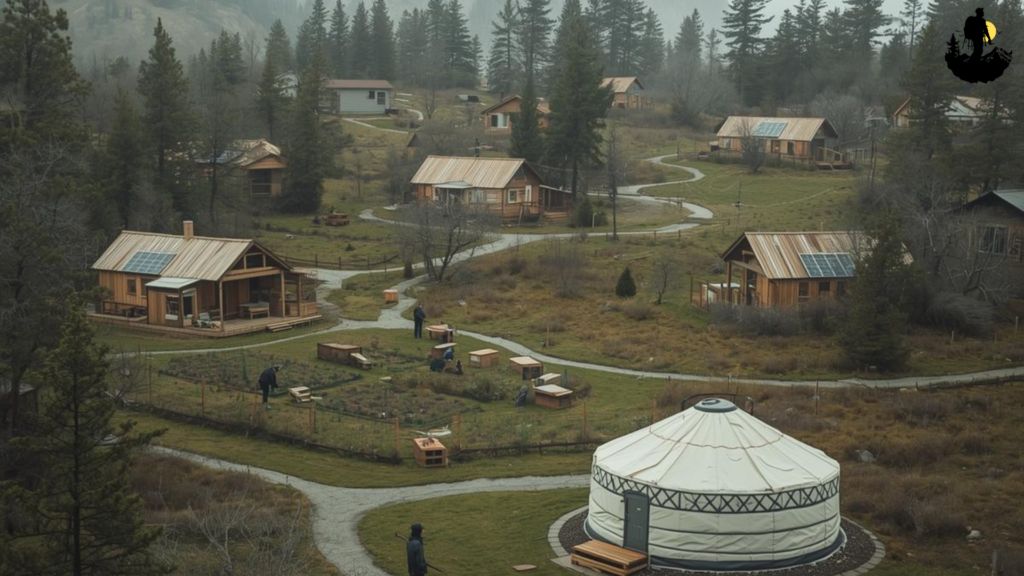
A network of cabins connected by dirt paths sits beneath red rock cliffs. Rainwater collection and shared gardens keep the community running. - Cedar Valley Tiny-Home Network, Arkansas
A collection of tiny homes surrounds common gardens. People grow herbs, vegetables, and fruit trees while keeping living costs extremely low.
How Travelers Can Visit Off-Grid Communities Respectfully
Some micro-communities welcome visitors for tours, workshops, or short stays. Many want to share information, especially with curious travellers interested in sustainability. Respect matters. Visitors need to follow local rules, ask permission before taking photos, and avoid entering private areas without guidance.
Conversations with residents give deeper insight into their lifestyle. Many enjoy explaining how their systems work or why they chose the off-grid path. Asking thoughtful questions shows interest without judgment.
Bringing your own supplies takes strain off the community. Water, snacks, and basic gear help reduce the impact of your presence. Leaving no trace ensures the land stays clean and untouched.
Comparison Table of Notable Off-Grid Micro-Communities
| Community | State | Difficulty | Special Feature |
| Earthship Neighborhoods | New Mexico | Moderate | Recycled-material architecture |
| Three Rivers Collective | Oregon | Moderate | Forest permaculture |
| Blue Mountain Homestead Cluster | Montana | Hard | Harsh winters and rugged land |
| Black Hills Off-Grid Meadows | South Dakota | Moderate | Wide open landscapes |
| Arcosanti | Arizona | Easy | Experimental eco-architecture |
| Pine Hollow Eco-Cluster | Pennsylvania | Moderate | Natural building methods |
| Cedar Valley Tiny-Home Network | Arkansas | Easy | Low-cost tiny-home living |
What Off-Grid Communities Teach About Modern Life
These communities show that independence can coexist with strong relationships. Life slows down, yet it gains richness through shared work, meaningful conversations, and constant creativity. The land dictates the schedule, and the seasons guide the tasks. Resourcefulness replaces convenience. Community replaces anonymity.
Many people leave these places with a deeper appreciation for the effort behind everyday comforts. A single cup of tea requires water collection, solar power, and heat from a woodstove. A loaf of bread requires growing, grinding, or carefully buying high-quality grains. These small tasks reveal how much of modern life relies on systems we rarely think about.
Reflection on Off-Grid Living
Micro-communities living off the grid remind us that simple living still exists in a busy world. These places thrive through cooperation, resilience, and intention. Anyone curious about off-grid communities usa can find environments where people build their own paths instead of following the rhythm of modern cities.
Life in these settlements asks for steady hands and patient hearts, yet it rewards residents with peace, clarity, and a strong sense of belonging. Off-grid living may not fit everyone, but its values offer lessons that feel surprisingly universal. Slowing down, working with the land, and staying connected to neighbors can reshape the way a person sees the world.